For dairy and beef producers, protein is not merely a number on a feed label. It is a practical question of rumen supply, animal performance, and feed cost. What are the benefits of bypass protein for ruminants? This question matters when microbial protein cannot fully meet the animal’s needs. Bypass protein, also called rumen-undegradable protein, escapes much of rumen breakdown. It can deliver amino acids to the small intestine, where absorption supports milk production, muscle growth, reproduction, and recovery.
Dr. Peter H. Robinson, a respected ruminant nutrition researcher, has explained, “The goal is not to bypass rumen fermentation completely, but to balance microbial protein with absorbable amino acids.” That balance is easy to discuss and harder to achieve. A high bypass value alone does not guarantee better results. Protein quality, digestibility, amino acid profile, forage conditions, and energy supply all influence the response. A ration may contain expensive protected protein, yet show little improvement if energy limits microbial growth.
In practical feeding, the details are visible. A high-producing cow may maintain steadier milk protein. A growing steer may use nutrients more efficiently. Manure, body condition, and feed intake still require close observation. Results can vary between farms, breeds, seasons, and ingredients. Therefore, bypass protein should support a balanced ration, not replace sound formulation. This article examines its nutritional benefits, suitable applications, limitations, and the management decisions that make its use more reliable.
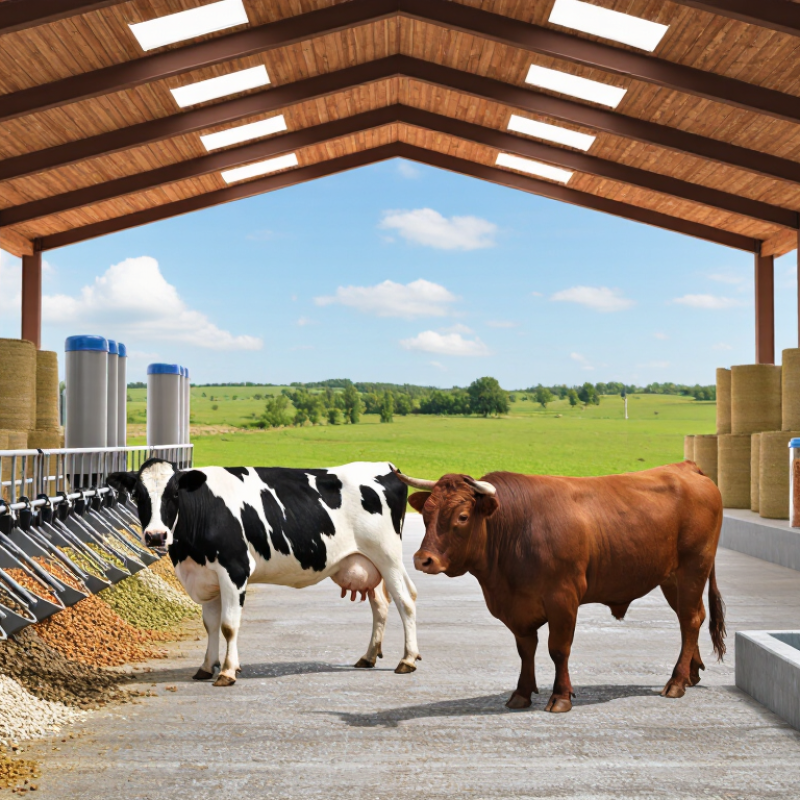
Bypass protein, also called rumen-undegradable protein, resists breakdown in the rumen. It passes into the small intestine, where enzymes digest it into absorbable amino acids. This pathway matters because rumen microbes already convert much dietary protein into microbial protein. However, microbial supply may not meet demand during peak milk production, rapid growth, late pregnancy, or illness.
The 2021 NASEM report on dairy cattle nutrition recognizes microbial protein as a major metabolizable-protein source. It also explains that animal performance depends on amino-acid supply after rumen digestion, not crude-protein percentage alone. A ration with 18% crude protein can still underdeliver usable amino acids. That detail is often missed.
The target is balance, not maximum bypass. Too little may limit intestinal protein. Too much can waste nitrogen and raise feed costs. FAO’s 2023 livestock emissions report links better feed efficiency with lower emissions intensity, although bypass protein is only one part of that solution. On farms, I would compare milk yield, body condition, manure texture, and feed intake for several weeks. Results can look convincing, but forage quality and rumen energy may be the real drivers. This is where practical judgment matters. Nutrient models guide decisions; they do not replace feed analysis or regular ration review.
| Nutrition dimension | Typical value or range | Why it matters | Practical use in a ruminant diet |
|---|---|---|---|
| Bypass protein (RUP) | Protein that escapes ruminal degradation and reaches the small intestine; commonly expressed as a percentage of crude protein. | It supplies amino acids directly to the animal when microbial protein alone does not meet requirements. | Use when metabolizable protein supply is limiting, especially in high-producing dairy cows and rapidly growing young stock. |
| Rumen-degradable protein (RDP) | Protein degraded in the rumen and used by microbes; many practical diets contain approximately 55–65% of dietary crude protein as RDP, depending on formulation. | RDP provides ammonia and peptides needed for microbial growth and microbial protein synthesis. | Do not replace excessive RDP with RUP; synchronize degradable protein with fermentable carbohydrate. |
| Microbial protein | Often supplies about 50–is 80% of the metabolizable protein reaching the small intestine, depending on diet and rumen function. | It is usually the most important source of absorbable amino acids for ruminants. | Maintain adequate fermentable energy, effective fiber, rumen pH, and RDP to support microbial protein production. |
| Intestinal digestibility of RUP | Frequently ranges from approximately 65–90%, depending on protein source and processing. | Undegraded protein is useful only when its amino acids are digestible and absorbable in the small intestine. | Evaluate both RUP supply and intestinal digestibility rather than selecting a feed solely for high crude protein. |
| Heat-damaged protein | Excessive heating can increase rumen escape while reducing available lysine and overall intestinal protein value. | A high RUP percentage does not necessarily indicate high-quality bypass protein. | Use properly processed ingredients and monitor indicators such as acid-detergent insoluble nitrogen when available. |
| Amino acid balance | Lysine and methionine are commonly limiting amino acids in high-producing dairy cattle, although requirements vary. | Amino acid balance can affect milk protein synthesis more directly than crude protein concentration alone. | Formulate for metabolizable protein and essential amino acids, avoiding unnecessary crude protein oversupply. |
| Dietary crude protein | Common lactating-dairy diets often contain roughly 16–18% crude protein on a dry-matter basis, but the correct level depends on production and stage of lactation. | Increasing crude protein without improving metabolizable protein supply can raise nitrogen losses without improving performance. | Adjust protein according to milk yield, body weight, forage quality, dry-matter intake, and laboratory feed analysis. |
| Nitrogen-use efficiency | Typical dairy-cow nitrogen-use efficiency is often approximately 25–35%, with the remainder excreted through manure and urine. | Balanced protein and amino acid supply can help reduce avoidable nitrogen excretion. | Avoid excessive total protein and match RDP, RUP, fermentable energy, and amino acids to animal requirements. |
| Best response conditions | Most likely when animals have high metabolizable-protein demand or when microbial protein supply is constrained. | Bypass protein is a targeted tool, not a universal replacement for rumen-degradable protein. | Consider it for peak-lactation cows, fast-growing cattle, and diets with high-quality forage but insufficient intestinal amino acid supply. |
| Monitoring indicators | Milk yield, milk protein, body-condition score, growth rate, feed efficiency, manure consistency, and milk or blood urea indicators. | Performance and nitrogen-status indicators help determine whether the protein change is beneficial. | Reassess the complete ration after changes rather than judging bypass protein from one measurement alone. |
Bypass protein resists breakdown in the rumen. It travels to the small intestine, where enzymes release absorbable amino acids. It is not magic.
Rumen microbes convert much dietary protein into microbial protein. During peak milk production, growth, pregnancy, or illness, this supply may fall short. Intestinal amino acids support milk protein, muscle repair, and fetal development.
No. An 18% crude-protein ration can still provide too few usable amino acids. Protein location and digestibility matter after rumen digestion. The percentage alone can mislead.
Heat treatment, protein structure, and moisture can limit microbial access. The feed particle passes through the reticulum and omasum. Acid and enzymes digest it later in the abomasum and small intestine.
Balance bypass protein with degradable protein, fermentable energy, and microbial protein. Too little may limit intestinal supply. Too much wastes nitrogen and increases feed costs. The right amount depends on forage, intake, production, and pregnancy stage.
Test forage dry matter, crude protein, fiber, and digestibility. Compare predictions with milk yield, body condition, intake, and manure consistency. One attractive number proves little.
Watch cud chewing, feed sorting, water intake, manure texture, milk protein, and body condition. A cow eating 22 kilograms of dry matter may need more usable amino acids. Poor forage or low rumen energy may be the real problem.
Not always. Protection and digestibility change with processing, heat, moisture, and animal conditions. Make small weekly adjustments, then reassess. Models guide decisions, but farm observations still matter.
Bypass protein is a portion of dietary protein that avoids extensive breakdown in the rumen and reaches the small intestine, where it can be digested and absorbed as amino acids. This process helps complement the microbial protein produced in the rumen, especially when animals have high growth, milk production, pregnancy, or recovery demands. What are the benefits of bypass protein for ruminants? It may improve the supply of essential amino acids, support muscle development, enhance milk protein production, and promote more efficient use of dietary nutrients when properly balanced.
Before adding bypass protein, producers should assess the animal’s species, age, production stage, forage quality, total crude protein, and energy supply. The selected source should be balanced with rumen-degradable protein, fermentable energy, minerals, and adequate fiber rather than used as a replacement for overall diet planning. Animal weight gain, milk yield and composition, feed intake, body condition, manure consistency, and general health should be monitored regularly. Adjustments should be gradual and based on performance results, nutrient analysis, and professional feeding guidance.

 Treo Nutrition