Healthy soil is more than dark, loose earth. It is a living system filled with organic matter, microorganisms, air, and water. When these elements work together, plants develop stronger roots and use nutrients more efficiently.
How to improve soil fertility without chemicals? The answer begins with observing your soil. Check its texture, drainage, pH, and existing plant growth before changing anything. A simple soil test can reveal whether nitrogen, phosphorus, potassium, or organic matter is limited. Guessing can waste time.
This guide explains practical ways to rebuild fertility naturally, including composting, cover cropping, crop rotation, mulching, and planting legumes. Mature compost can improve structure while slowly releasing nutrients. Cover crops, such as clover or field peas, protect bare soil and may add nitrogen when managed correctly. Leaf mulch also helps retain moisture, reduce erosion, and feed soil organisms.
Small changes matter.
However, natural methods are not instant solutions. Compost quality varies, and too much organic material can create nutrient imbalances. Legumes do not automatically solve every nitrogen problem. Soil improvement also depends on climate, crop choice, water management, and local conditions.
Experienced growers often keep simple records of planting dates, harvest results, rainfall, and soil test findings. Those notes reveal patterns that memory misses. Reliable recommendations should be supported by agricultural research and adjusted through careful observation. Even well-tested methods may need correction on your land. Healthy fertility is built gradually, with patience, measurement, and a willingness to rethink what is not working.
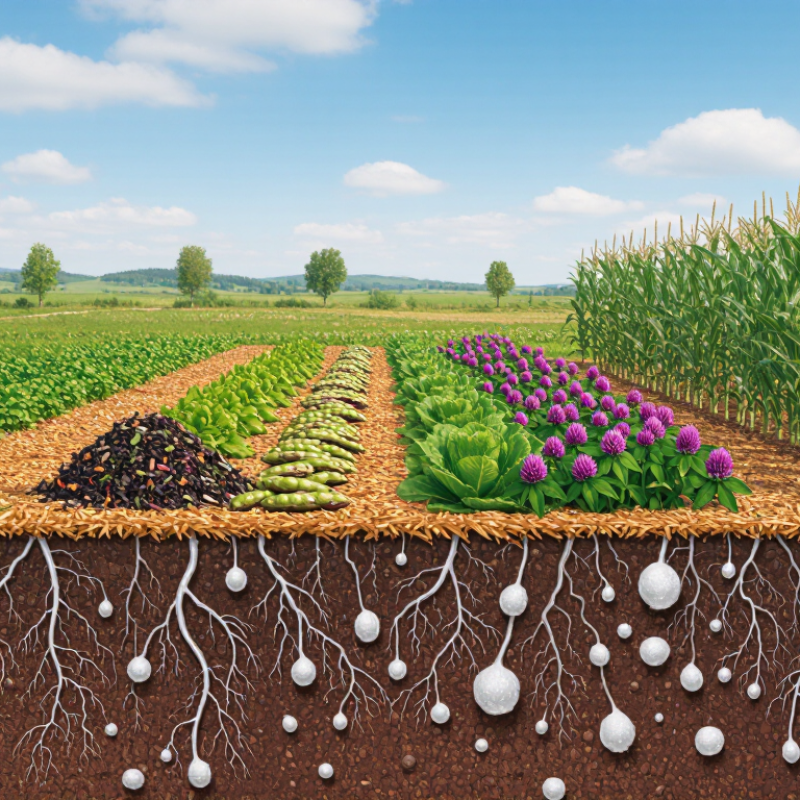
Healthy soil is more than dark, loose earth. It is a living system with minerals, air, water, roots, fungi, and soil organisms. The Food and Agriculture Organization’s Status of the World’s Soil Resources reports that about 33% of global soils are moderately or highly degraded. This makes reliable field indicators increasingly important.
Start with simple observations. Soil that crumbles gently often has better structure than soil forming hard clods. Earthworms, fine roots, and fungal threads suggest biological activity. A steady infiltration test can reveal compaction: pour one litre of water onto a small soil ring and record the drainage time. Slow movement may indicate blocked pores. A dark surface can mislead.
The United States Department of Agriculture’s soil health guidance identifies organic matter, aggregate stability, infiltration, and biological activity as useful measurements. Compost, leaf litter, cover crops, and diverse rotations can support these indicators naturally. Keep living roots in the ground when possible. Avoid bare soil after harvest.
Still, improvements are rarely instant. Excess compost can create nutrient imbalances, and one earthworm does not prove fertility. Test soil pH, organic matter, phosphorus, and potassium through a qualified laboratory.
Field signs guide decisions; laboratory results challenge assumptions.
Healthy soil contains minerals, air, water, roots, fungi, and many small organisms. It is a living system, not just dark earth.
Check whether soil crumbles gently instead of forming hard clods. Look for earthworms, fine roots, and visible fungal threads. These signs suggest biological activity, but they are not final proof.
Place a small ring on the soil and pour in one litre of water. Record how long the water takes to drain. Slow drainage may indicate compaction or blocked pores.
No. A dark surface can mislead you. Organic matter, structure, infiltration, and biological activity give better clues. Laboratory testing may reveal hidden nutrient problems.
Test soil pH, organic matter, phosphorus, and potassium. Use a qualified laboratory when possible. Field observations guide decisions, but test results can challenge assumptions.
Compost and leaf litter can increase organic matter and support soil organisms. Apply moderate amounts and observe plant responses. Too much compost may create nutrient imbalances.
Rotations change root patterns, nutrient demands, and residue inputs. Beans can follow cereal crops, while deep-rooted plants may loosen compact layers. Local soil and climate should guide the rotation.
Cover crops protect bare soil between harvests. Rye and oats provide dense roots, while clover and peas can add biological nitrogen. Buckwheat grows quickly in suitable conditions.
Thick cover crops may shelter slugs or consume stored moisture. Poor timing can also delay the next planting. Check soil moisture before choosing a seed mixture.
Cut young plants near early flowering for easier decomposition. Leave residues on the surface when erosion risk is high. Avoid burying large amounts of mature material.
Improvement is rarely instant. Weather, crop choice, moisture, and residue size all affect results. I once added too much mature material, and seedlings struggled afterward.
How to improve soil fertility without chemicals? Begin by understanding the natural signs of healthy soil, such as dark color, crumbly texture, earthworm activity, good drainage, and steady plant growth. Before making changes, test the soil’s pH, moisture, texture, and nutrient levels so improvements can match its actual needs. Adding compost, aged manure, leaf mold, and other well-decomposed organic matter can increase nutrients, improve structure, and support beneficial soil organisms.
Long-term fertility also depends on thoughtful land management. Rotate crops to prevent nutrient depletion and reduce pest buildup, while using cover crops and green manures to protect the surface and return organic matter to the soil. Efficient watering prevents both drought stress and nutrient leaching. Mulching helps conserve moisture, moderate soil temperature, and gradually feed the ground as it decomposes. Finally, encouraging biodiversity through varied plants, natural habitats, and healthy microbial activity creates a more resilient soil system that can support productive growth without relying on synthetic inputs.

 Treo Nutrition